How to Lead a Great Interview
There are few things more exciting than leading an interview. During the discovery phase of our projects, focus group interviews are our chance to dive deep into the mission, values, and aspirations of an organization, as well as build a sense of trust and connection with stakeholders.
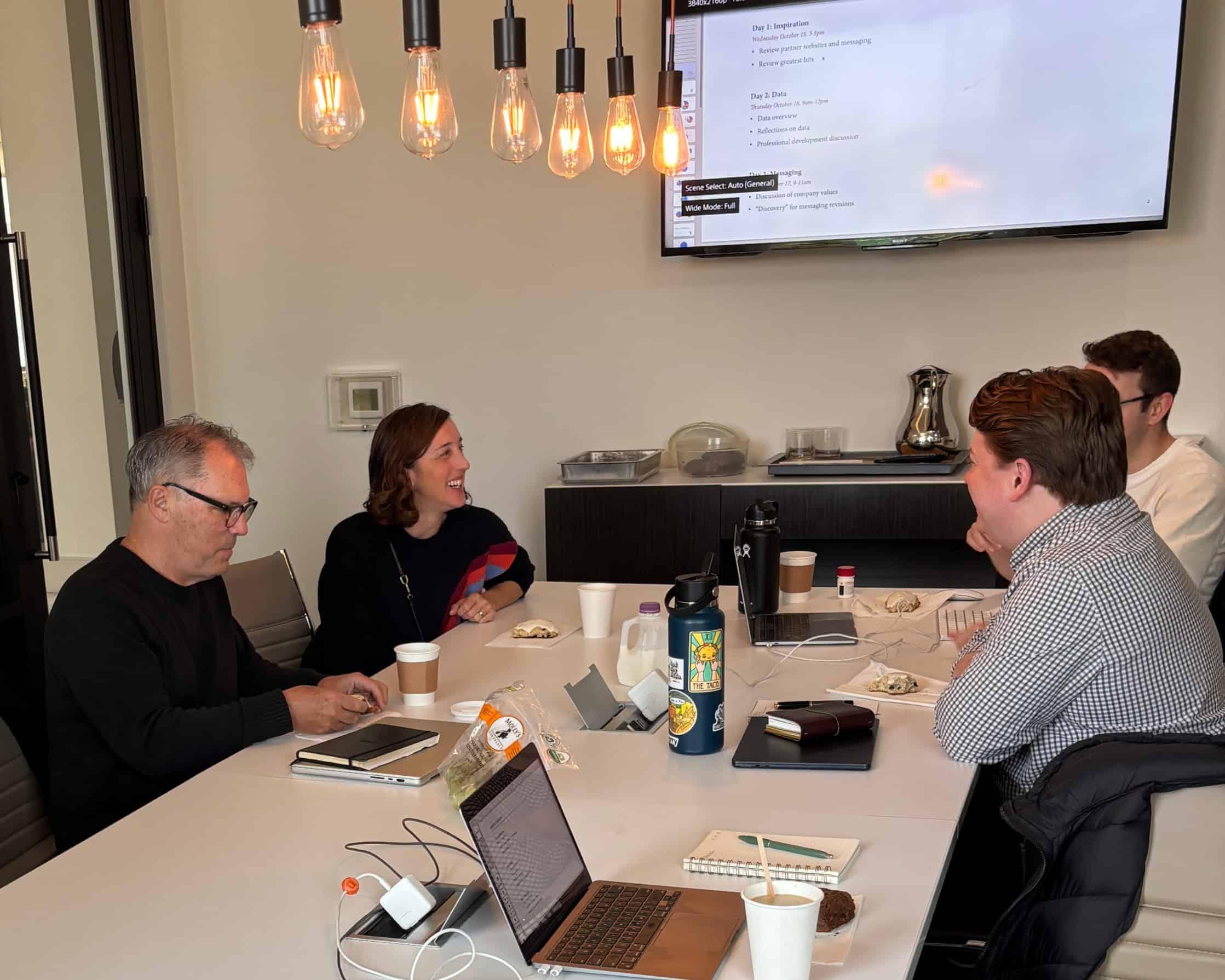
When conducting our discovery, we make it a point to speak to folks from every level of an organization—from the facilities team to the C-suite—and the candor and perspectives shared in these discussions drive our work. We’ve refined our process over the last few years, and here are a few tips on how to lead a productive, candid, and rewarding discussion:
Pick participants from across the organization
Our goal is to always capture a healthy cross-section of an organization, not just executives and leadership. Sometimes the best quotes come from the most unexpected places, like an ambulance driver or a brand-new student. We bring the same curiosity and empathy to every conversation, no matter what the person’s role is, and they all have something to share that informs and guides our work throughout the engagement.
Prepare topics, but don’t set them in stone
We develop a list of items we want to address before every interview, but we don’t let these topics straitjacket the discussion. Rather, we use our list of topics as a guide so that each interview feels organic and conversational, while ensuring we still cover everything we set out to know. Even if we don’t ask every question in a linear fashion, we still find that our interviews conclude with all of our questions answered. Conversational tangents and follow-up questions to responses we may not have been expecting teach us even more about an organization and the interview subjects, yielding much more robust findings than if we’d just stuck to our list of questions. As an added bonus, oftentimes those tangents end up leading back to topics we wanted to cover anyway.
Facilitate discussions with your head and your heart
In a group interview, it helps to think analytically: If you have five people attending a 60-minute session, that approximates to 12 minutes per person–and you want to try to make sure that is achieved with the right balance of rigidity and flexibility. Maintaining an awareness of who is speaking and how much takes practice. It also helps to ask questions or provide prompts that encourage participants to give quick inputs, allowing you to gather more points of data from more people in a given time frame.
To encourage quieter participants to open up, we allow ourselves to be vulnerable in the process of asking a question or transitioning topics, and share a bit about ourselves. Emotional intelligence is a vital dimension of a good interview, and we’re always focused on striking a balance between being authentically ourselves in service of the discovery conversation, while always remembering the interview is not about us.
Interview as a team
In each discovery conversation, we aim to have two Librettists present, allowing us to balance the facilitation, notetaking, and overall guidance of an interview. We often compare this collaborative approach to a road trip: one person is the driver, and the other is the passenger. For the bulk of the drive, the person behind the wheel is leading you (quite literally) along your path to the destination. But every once in a while, they’ll need help from the passenger to get them back on course. The driver relies on the passenger during opportune moments, and the passenger provides that light touch of guidance to keep things moving forward efficiently.
Conclusion
Leading a great interview is a balance between focus and spontaneity. Our ultimate goal is to gain a greater understanding of the organization by meeting with a vast cross-section of its staff. We let our intellectual curiosity drive the interviews and in the end, and use our insights to develop meaningful, authentic communications materials for the client.